This is the second route on this notebook and the longest one on it: fourteen days, one car, and a start in Sichuan that ends in Qinghai, a province away from where you began. Where the five-day loop goes out and comes back, this one keeps going west and north, and the further you get the fewer travellers you see. On the last monastery legs we met more pilgrims from Lhasa than tourists.
We drove it from 22 July to 4 August 2026, with Magda from Baba goes China and her family. Most of the first half is the same country as the five-day loop, and the two days at the front are that route's opening compressed into one — so I've kept them short here and linked them rather than repeating myself. Everything that makes this route its own trip happens in the middle: the black tent, and the monasteries of Baiyu, Derge and Dzogchen.
The honest shape of it is this. The first day and the run to Xining are the long drives. The ten days between them are short hops with a full day inside each, and the only place I'd slow down further is Maisu. If you are choosing between this route and the five-day loop, the loop is the easier introduction; this one is for somebody who has already seen the grassland and wants the monasteries and the nomad country behind it.
Names of guesthouses, restaurants and valleys are given in English with the Chinese in brackets — tap the bracket to copy it, so you can show it to a driver or a waiter.
The basics
- Route
- Chengdu → Wolong → Danba (Zhonglu) → Tagong → Litang → Xinlong → Baiyu → Maisu → Derge → Dzogchen → Sershul → Yushu → Xining
- Days
- 14 days, 13 nights
- When we drove it
- 22 July – 4 August 2026
- Best season
- March to October — greenest in high summer, which is when we drove it
- Best light
- Dawn at the monasteries; the last hour on the grassland; the long morning on the passes
- Pace
- Two long days, at the front and at the back; short hops with full days in between
- Where you sleep
- A manor in Zhonglu · one night at Tagong · a nomad's black tent · Litang's old town · a county town · a business hotel in Baiyu · a village guesthouse in Maisu · Derge · a monastery guesthouse · Yushu · Xining
- Driving
- Your own car, or a chartered car and driver
The route, leg by leg
- ChengduStart · Day 1 285 km · 7–8 h
- Zhonglu, DanbaNight 1 110 km · 3.5 h
- TagongNight 2~3,700 m 20 km · 40 min
- A nomad's black tentNight 3~3,800 m 240 km · 5 h
- LitangNight 4~4,000 m 150 km · 3 h
- XinlongNight 5 255 km · 6.5 h
- BaiyuNight 6 120 km · 3.5 h
- MaisuNight 7~3,560 m 105 km · 2.5 h
- DergeNight 8 300 km · 6 h
- SershulNight 9~4,200 m 150 km · 2.5 h
- YushuNights 10–11~3,700 m 790 km · 12–13 h
- XiningNights 12–13Finish · Day 14
Approximate driving distance and time from one stop to the next (read top to bottom), not counting time spent at them.
Quick answer: the route only works in this order. You climb slowly over the first two days, which puts you at 3,700 m on the grassland and above 4,000 m in Litang without an altitude jump anywhere, and you finish with a 13-hour drive that you want to enter rested. The part people get wrong is treating the middle as transit — it isn't. The tent stay and the monastery days around Baiyu and Derge are the trip; the long drives are just how you get to them.
At a glance
| Day | Where you sleep | The point of the day |
|---|---|---|
| 1 | Zhonglu, Danba | Pandas at Shenshuping, the climb over the pass, then straight down into the watchtower valley |
| 2 | Tagong (~3,700 m) | Over the Geda Liangzi pass onto the grassland: two monasteries and the mani stones |
| 3 | A nomad's black tent | Out onto the grazing ground at 9 — tsampa, butter tea, and a stove that needs feeding |
| 4 | Litang | Milking at 8, breakfast in the tent, back to Tagong — then four hours on the G318 |
| 5 | Xinlong | Litang's old town and its monastery in the morning; north in the afternoon (our first mistake) |
| 6 | Baiyu | The road past Yarchen Gar — closed to visitors — and a beautiful drive into Baiyu |
| 7 | Maisu | Baiyu Monastery, then Kathok at 4,800 m — and the village of workshops |
| 8 | Derge | North to the Derge printing house: 300,000 woodblocks, still printing by hand |
| 9 | Sershul | Dzogchen Monastery under the snow peaks, the white stupa, and a monastery guesthouse |
| 10 | Yushu | Two hours, and after ten days you are back in a city |
| 11 | Yushu | The “Little Switzerland” road: the Wencheng Princess temple, cliff carvings, Gyanak Mani |
| 12 | Xining | Thirteen hours. We should have broken it in two |
| 13 | Xining | The Tibetan culture museum, then the Dongguan mosque and the snack street |
| 14 | Xining | One more day: the provincial museum, after the rest of the group flew home |
Day 1 — Chengdu to Zhonglu: the loop's first two days, compressed
Leave Chengdu at about 8:00. On this route you do in one day what the five-day loop does in two: the pandas at Shenshuping (¥150 a person, earliest arrival 10:00), then the climb over the pass, and then straight down into Danba and the village of Zhonglu , where you sleep.
What you give up is Siguniang: the two valleys under the four peaks, and the night in the village at 3,200 m that the loop uses to start its climb. What you get back is a day. If you have never been to this part of Sichuan before, take the loop's first two days instead — the altitude comes to you more gently, and the four peaks are worth the extra night. If you have, this day is fine.
Photo note: it's a driving day with one real stop in it, so the pictures come out of the car — the pass, the river gorge, the first sight of the watchtowers from above. Keep the camera within reach and the window clean.
Day 2 — Zhonglu to Tagong: onto the grassland
Leave at about 9:00, and this is the day the trip changes character. Through Danba town, up past the Yala Snow Mountain viewpoint , over the Geda Liangzi pass at around 4,200 m, and down onto Tagong. Somewhere in the middle of that the gullies and forest give way to plains and grass, and that change of country is the reason to drive this road at all.
Arrive around 12:00 and park in front of Tagong Monastery . Lunch next door at the Nepali restaurant — Nepali and Indian cooking, and a sun room to sit in afterwards. At about 2 pm, the monastery: a Sakya monastery with the eight-year-old Shakyamuni as its main object of veneration. Only that one hall asks for shoes off and forbids photography; in every hall, keep the camera off the statues anyway, and ask before photographing anyone praying.
At about 3:30 drive the fifteen minutes to Muya Monastery — Nyingma, and built like a campus, with a grand classroom in the middle and dormitories and a dining hall either side. Five minutes further on, Jiagulong is a mani stone heap ringed by big prayer wheels — walked clockwise, with everyone else.
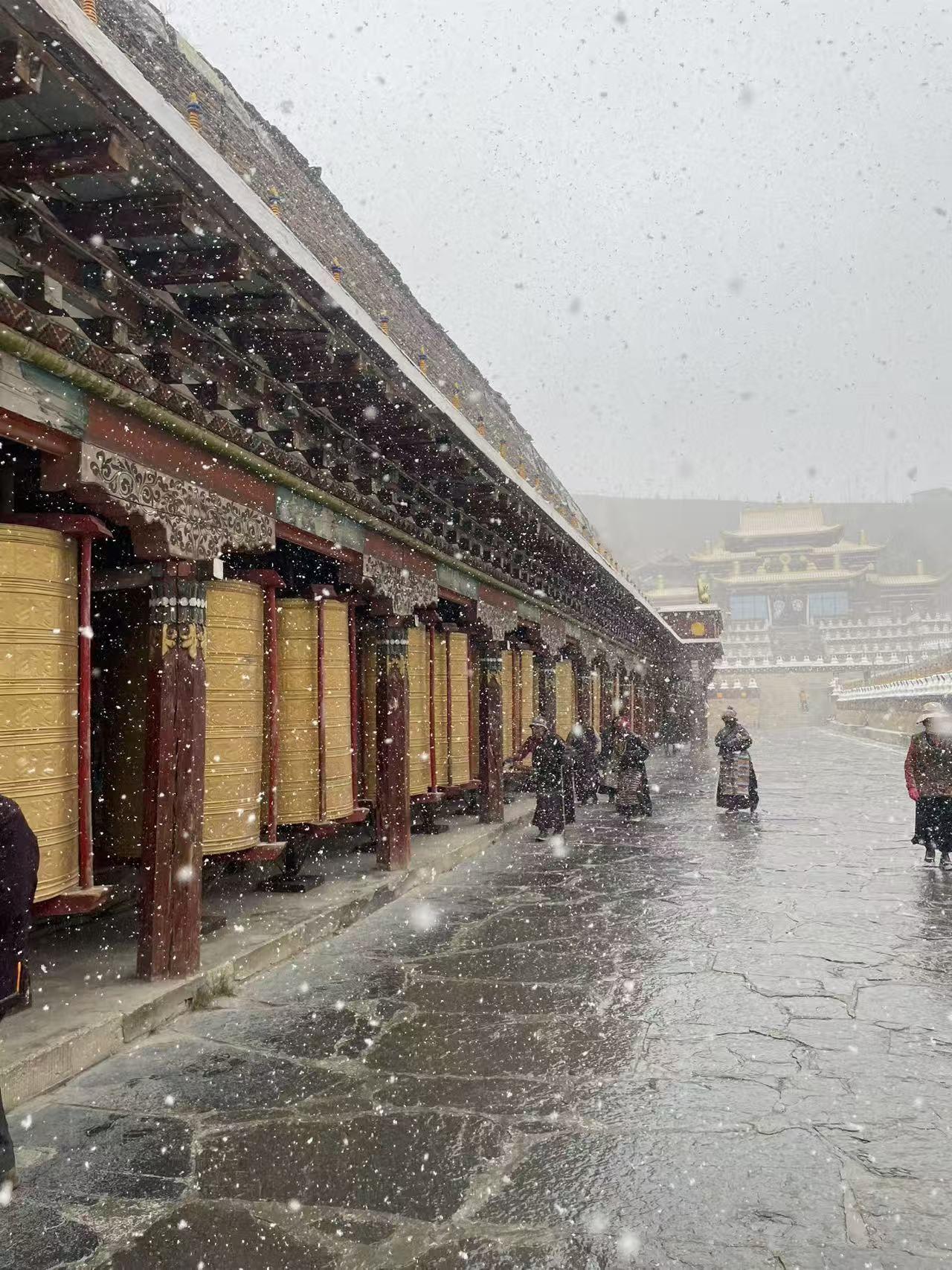
Where you sleep: Dejieling Manor , run by a Tibetan family who take foreign guests. Breakfast is a real Tibetan one: yak yoghurt, butter tea, barley cakes, local apples, eggs. This is your first night at 3,700 m.
Photo note: the last hour of light on the grassland is the reason this place is famous. Don't spend it at dinner. The full version of this day, with the monastery etiquette in detail, is in the five-day loop post.
Day 3 — Onto the grazing ground: the black tent
At 9:00 the nomad family's own small car comes for you. You leave Tagong behind, run out past the edge of the grassland, and then turn off onto their grazing ground. The camp is a black tent — the woven yak-hair tent that has been the summer home on this plateau for as long as anyone has kept herds. That tent is the accommodation. There is no other building.
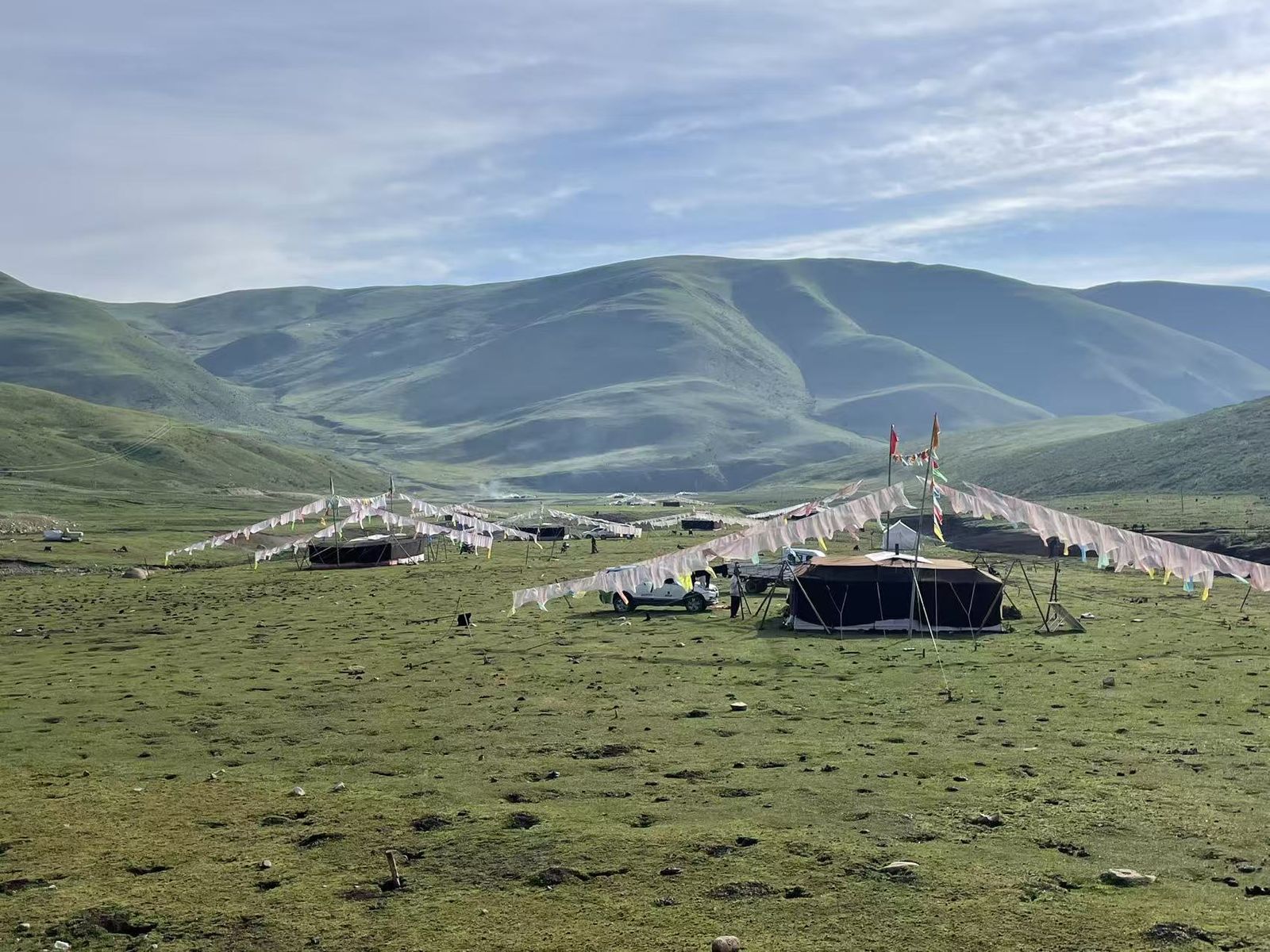
The day is not a performance put on for guests. You make tsampa — roast barley flour, butter, tea, and your hands — and you make butter tea . The children will find you long before you find them. And in the middle of the tent there is a stove, with a chimney, and it has to be fed with wood through the day and into the evening. That job becomes yours; nobody will ask you to do it twice.
What it is honestly like: it is smoky, the floor is the ground, the toilet is somewhere outside and the light goes out early. It is also the single most memorable night of the fourteen, and the one I would keep if I could only keep one.
Where you sleep: in the tent, on the family's bedding, around the stove. Bring a warm layer even in July — grassland nights are cold in any month — and take a head torch.
Photo note: the light coming down through the smoke hole in the roof is the picture, and it's there all day. Ask before you photograph people inside the tent; it is their home, not a set.
Day 4 — Milking, back to Tagong, and the G318 to Litang
Up at 8:00 and out to milk the dri — the female yaks — with the family. The calves get first turn and then it's your hands. Breakfast afterwards in the tent, then the family's car takes you back down to Tagong town.
Lunch in Tagong, and then the drive that puts this route well beyond the loop: about four hours to Litang, most of it on the G318 — the national road that runs from Shanghai all the way to the Nepal border, and the one Chinese drivers mean when they say "the Route 66". It is the same story as Route 66 in the way that matters: people come from all over the country to drive this stretch once in their lives.
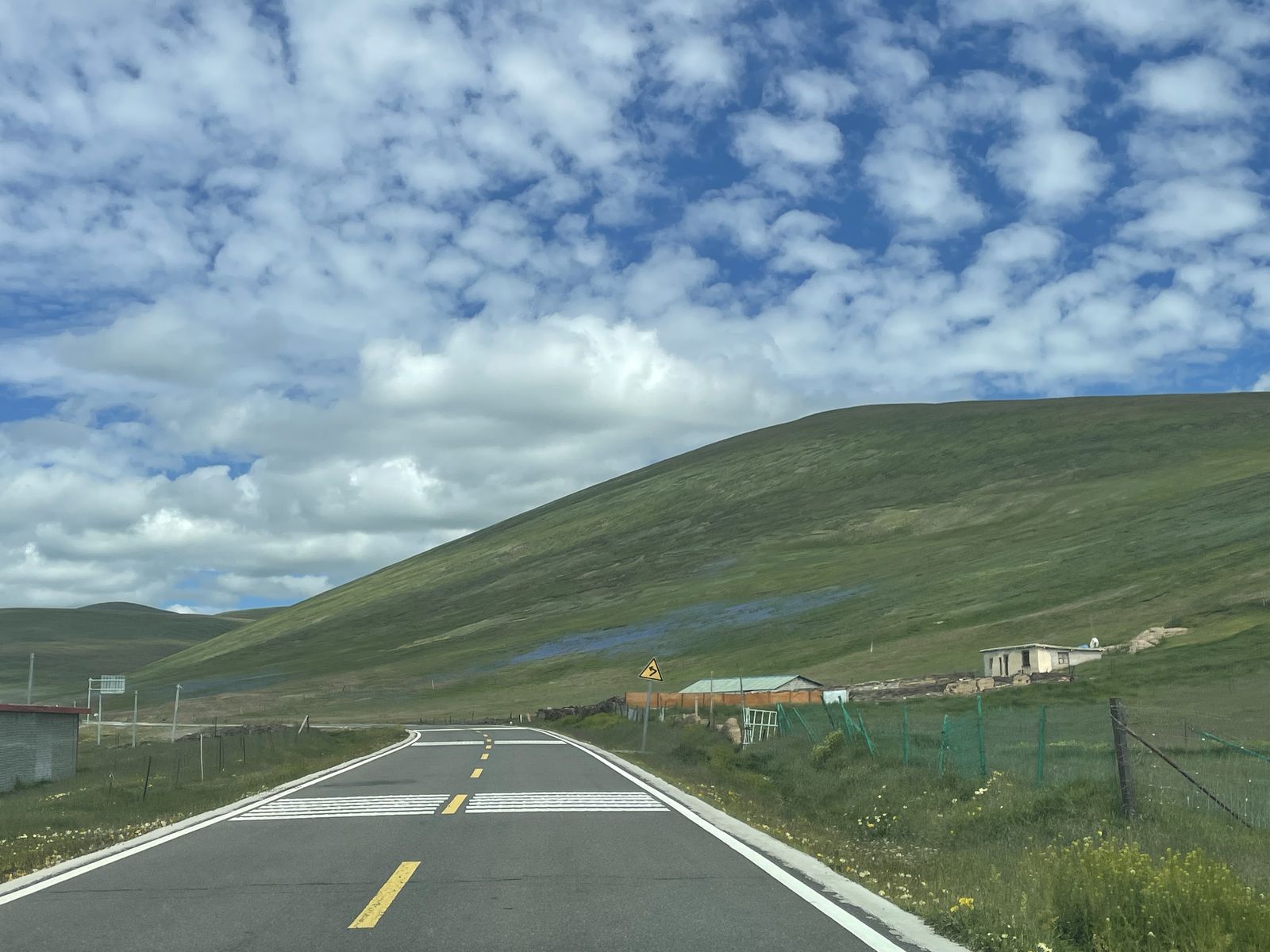
The reason to be awake for it is that the country changes twice: down out of forest and gorge, then open onto grassland that goes on further than the weather does. Somewhere on this stretch you cross from the wooded side of the plateau to the grazing side, and after that the country stays open.
Where you sleep: the Muzhe Hotel , which is inside the old town — the "thousand-household Tibetan village" — rather than out by the ring road. Dinner is on the pedestrian street next to the hotel; if you are particular about food, there is a branch of Yuanji Wontons , a national chain that wraps its dumplings to order, and they are genuinely fresh.
After dinner: in the middle of the square in the old town there is circle dancing — the guozhuang. Unless it rains, the local people are out there dancing. Join in or watch; both are fine, and neither is a show.
Day 5 — Litang in the morning, then north to Xinlong
The Muzhe Hotel doesn't do breakfast, so eat outside. Then walk the old town and, after that, go round Changqingchun Ke'er monastery — the great monastery of Litang, usually just called Litang Monastery.
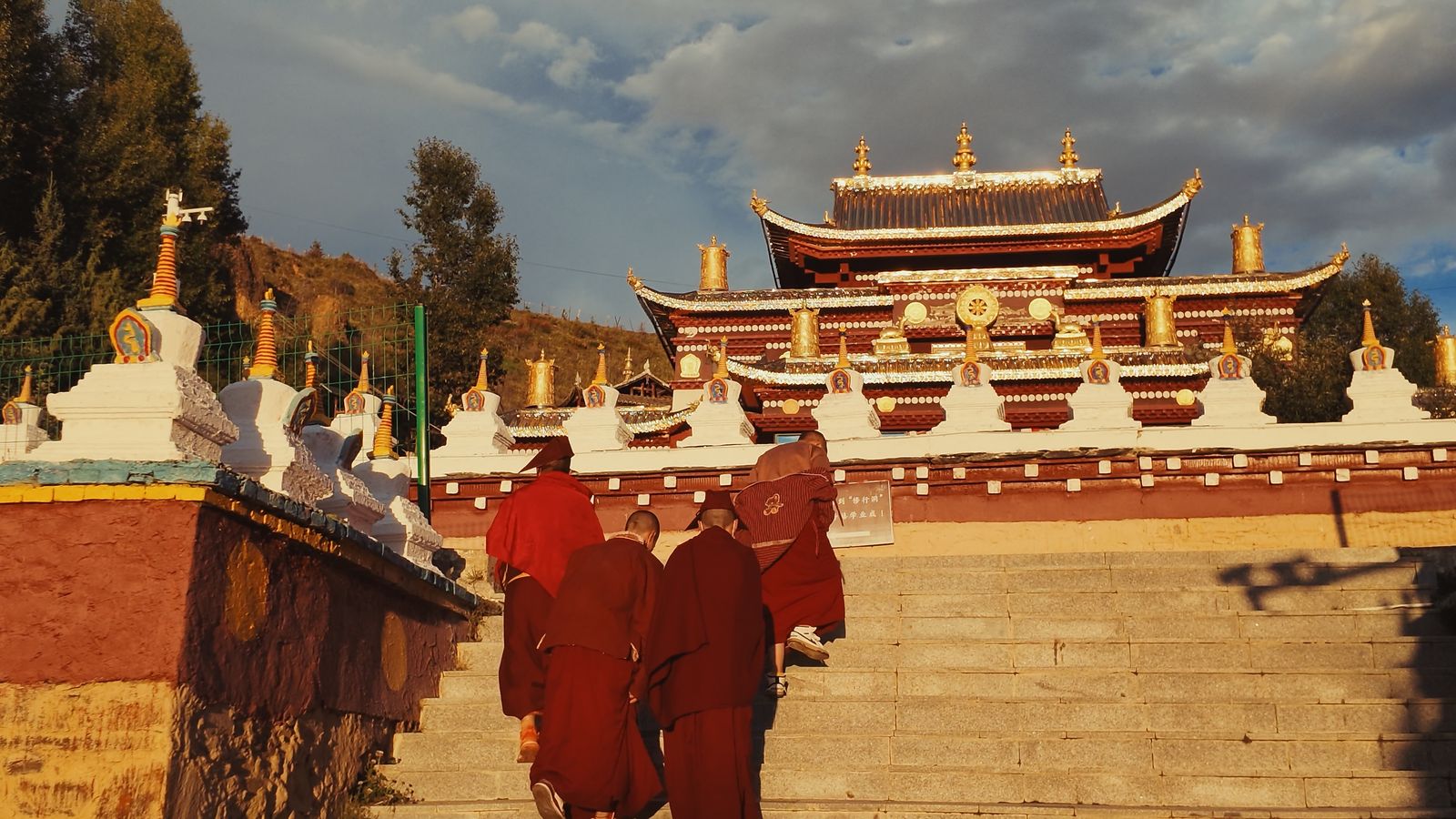
Have lunch at 12:00 and set off north, for Xinlong county .
Honestly, this was the biggest mistake of the trip. There is very little to see in Xinlong. We went to Cuoka Lake and it isn't special — it's small, and you pay an entry fee for it. The county town is an ordinary county town. If I were laying this route out again, I would not break the journey here at all — I would have gone south first, Litang to Batang, and up into Baiyu from there, skipping Xinlong entirely. It cost us a day that Maisu should have had.
Day 6 — The road to Baiyu, past Yarchen Gar
Leave Xinlong at 9:00, heading for Baiyu county , with Yarchen Gar on the way. The drive is the good part: this is one of the most beautiful stretches of road on the whole fourteen days.
About Yarchen Gar, plainly: it is astonishing to look at, and it is closed. The entire area is designated a meditation zone and visitors are not admitted — and in practice that means foreign passports are not admitted either. Expect to be stopped short of it. I'm telling you this because it is the kind of place people plan a whole trip around, and on this route you have to accept seeing the valley rather than the town.
Where you sleep: the Manyu Hotel in Baiyu — a clean business hotel, no local character, and exactly what you want after a day like that. There's a laundry room by reception on the ground floor, which matters more than it sounds on a two-week drive. For dinner, walk up and down Hedongshang Street in the town — lots of local snacks, all of them good.
Day 7 — Baiyu Monastery, Kathok, and the village of Maisu
Breakfast at the hotel runs 7:30–10:00, Chinese with some Western — bread, salad — and the thing to order is the rice noodles, cooked to order in front of you.
Then drive up to Baiyu Monastery , a Nyingma monastery on the hillside above the town. What you notice is the sound: the monks chant every day with the traditional instruments, and they are working, not performing. On the whole they don't object to being photographed — but ask first. Afterwards, walk the old residential lanes below the monastery; the houses are layered up the slope and it is the best photography of the morning.
Finish around 13:00, eat, and drive about one hour to Kathok monastery . Kathok is one of the mother monasteries of the Nyingma tradition, founded in the twelfth century — more than 800 years — and known as the "second Vajra Seat". It sits at about 4,800 m, it is remote even by the standards of this route, and it is worth every metre. To reach the main hall you keep driving the mountain road all the way to the top; inside, the statues are the largest you will see anywhere on this journey.
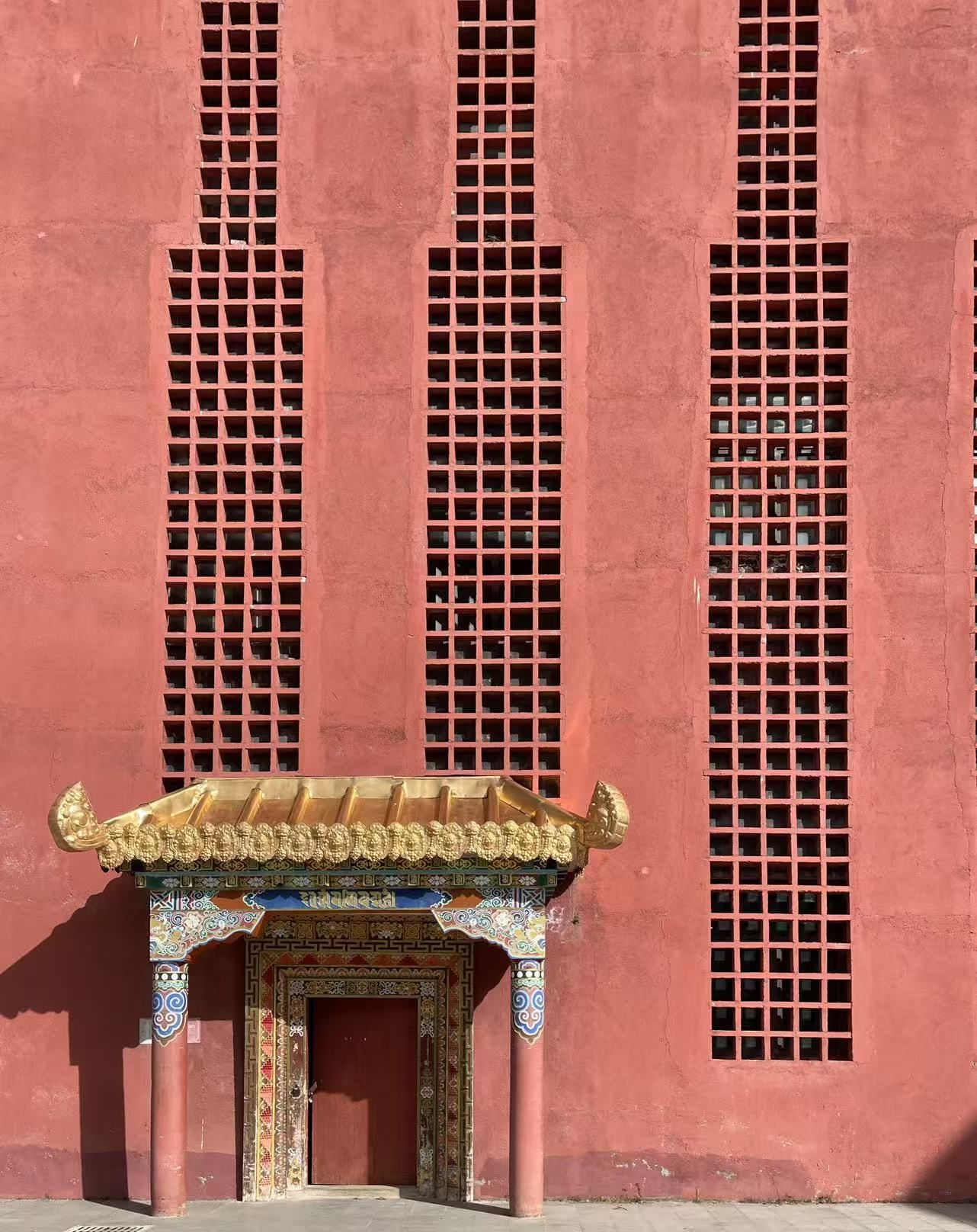
There is a vegetarian restaurant at the monastery, and this is where to eat: the noodle and vermicelli soup is simple, filling and full of flavour, and it is the dish I'd order again.
Beside the monastery is its college of the ten sciences — the only one of its kind. The ten sciences are the five major ones (language, logic, medicine, crafts, and inner knowledge) and the five minor ones (rhetoric, poetics, prosody, drama, and astronomy). To graduate from an ordinary five-sciences college takes six years; here it takes thirteen — ten years of study and debate, and three in retreat.
The last thing worth knowing about Kathok is how few people go. It is far enough out that most travellers have never heard of it; the visitors we met on the road up had almost all come from Lhasa by chartered car, and they were pilgrims, not tourists.
Where you sleep: Maisu , at the Duopu Nuozi guesthouse . You will not find much about Maisu's accommodation online, and there is very little of it. The village is tiny and has almost no restaurants — ask the guesthouse owner to cook for you in the evening, and they will.
Day 8 — Maisu, then north to Derge
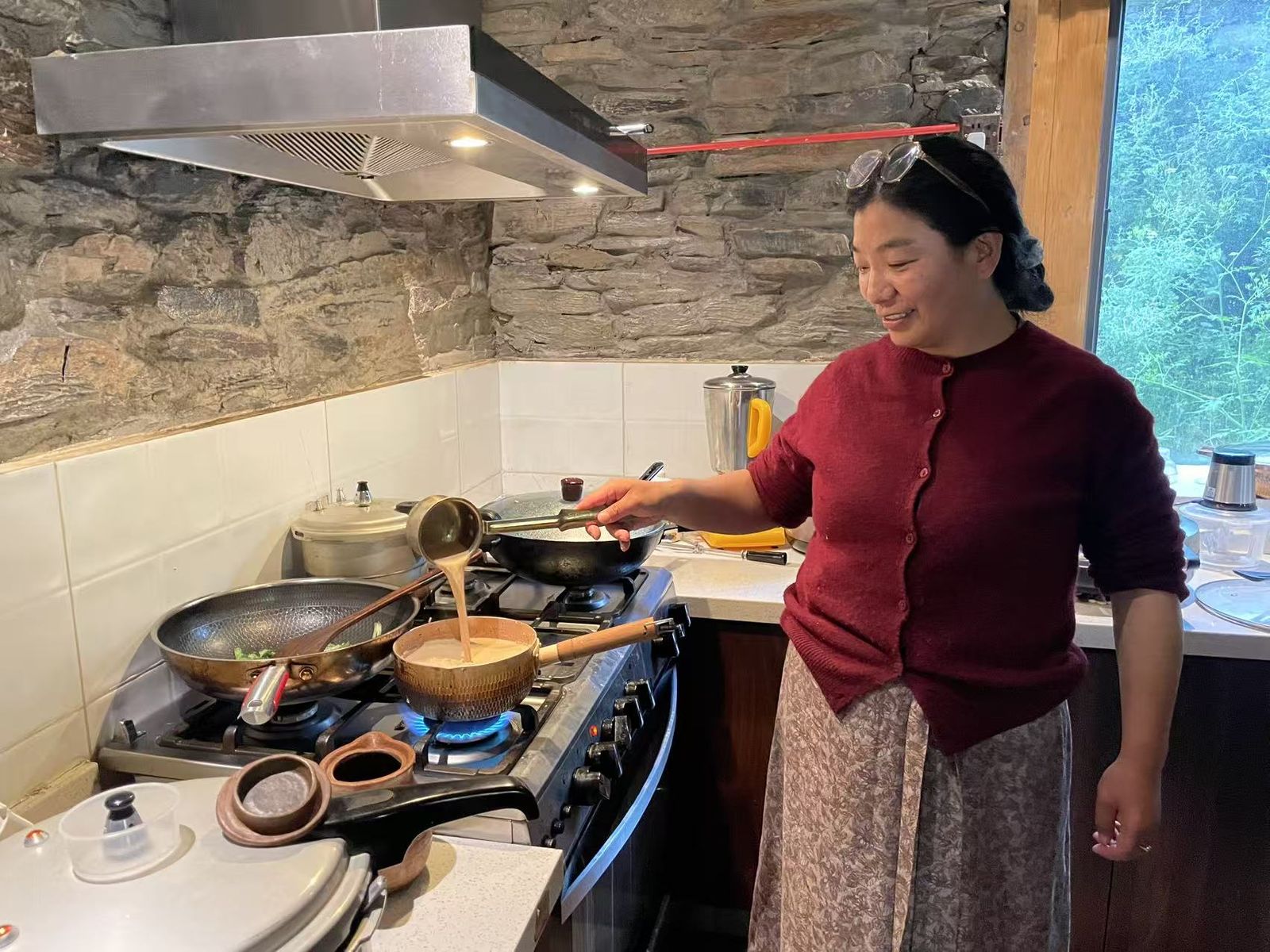
Breakfast at Duopu Nuozi is one of the reasons to come. The owner's wife studied English literature in India, and she cooks Indian-style in the morning: masala tea, masala potatoes, yak yoghurt, home-made yak butter, and barley cakes baked fresh every day. I asked her once why the barley cakes smell the way they do. She said she doesn't use barley flour alone, because it is coarse — she mixes in a proportion of ordinary wheat bread flour, along with the barley and yak milk from their own herd. It is a small thing, and it is the best breakfast of the two weeks.
Before you leave, walk the village. This is the place I would give more time to. Maisu is strung along a valley with more than twenty workshops in it, each doing a different craft: black pottery , thangka painting, calligraphy, Tibetan incense , copperwork, gold inlay, Tibetan dress, and cloth woven from yak hair. Two days here would not be too many. Not staying two nights is the second mistake of this trip, and it's the one Magda and I agree on most strongly: this is a place you are lucky to reach, and it deserves more than an evening.
Part of why it is still like this: this is the leg we drove with Baba goes China, and they write about it on their own site as somewhere they would rather not make too well known — it is that quiet, and that good.
Then drive north to Derge . On the way you pass the Sichuan–Tibet border, which is worth a short stop for a photograph: without a special permit you can't cross into Tibet, and it's worth understanding that before you assume the road simply continues.
Reach Derge around 12:00. For lunch, another branch of the dumpling chain, Xiong Daye — or Jiaxiangyuan , which I think is the best restaurant in the county town.
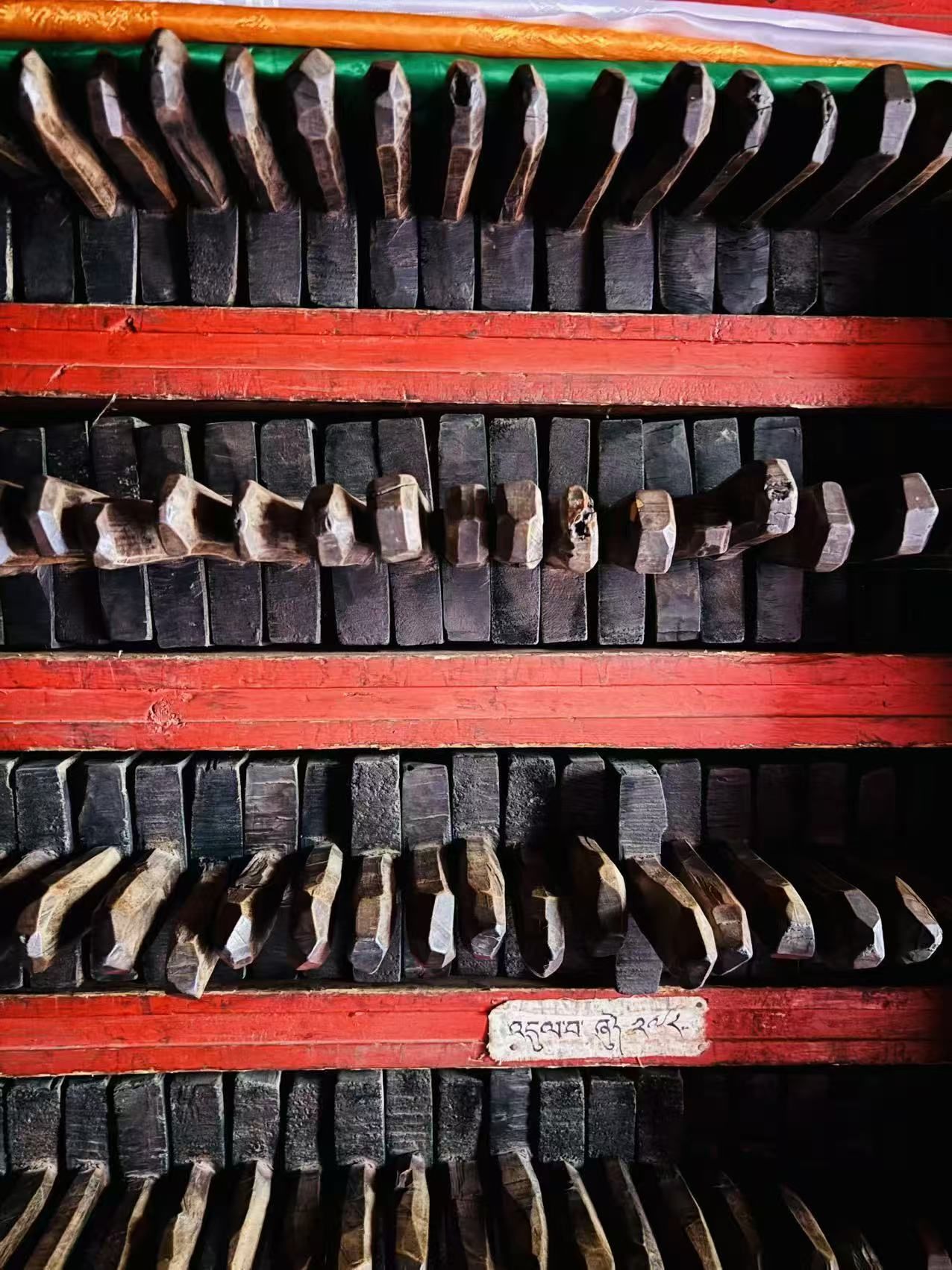
In the afternoon, the Derge Printing House — one of the three great printing houses of the Tibetan world, founded in 1729, with a complete set of old woodblocks still in use and printing still done by hand in front of you. The ticket is ¥50. What you are looking at is 300,000 hand-cut woodblocks, including the most accurate editions of the Kangyur — the words attributed to the Buddha — and the Tengyur, the commentaries his disciples wrote on them.
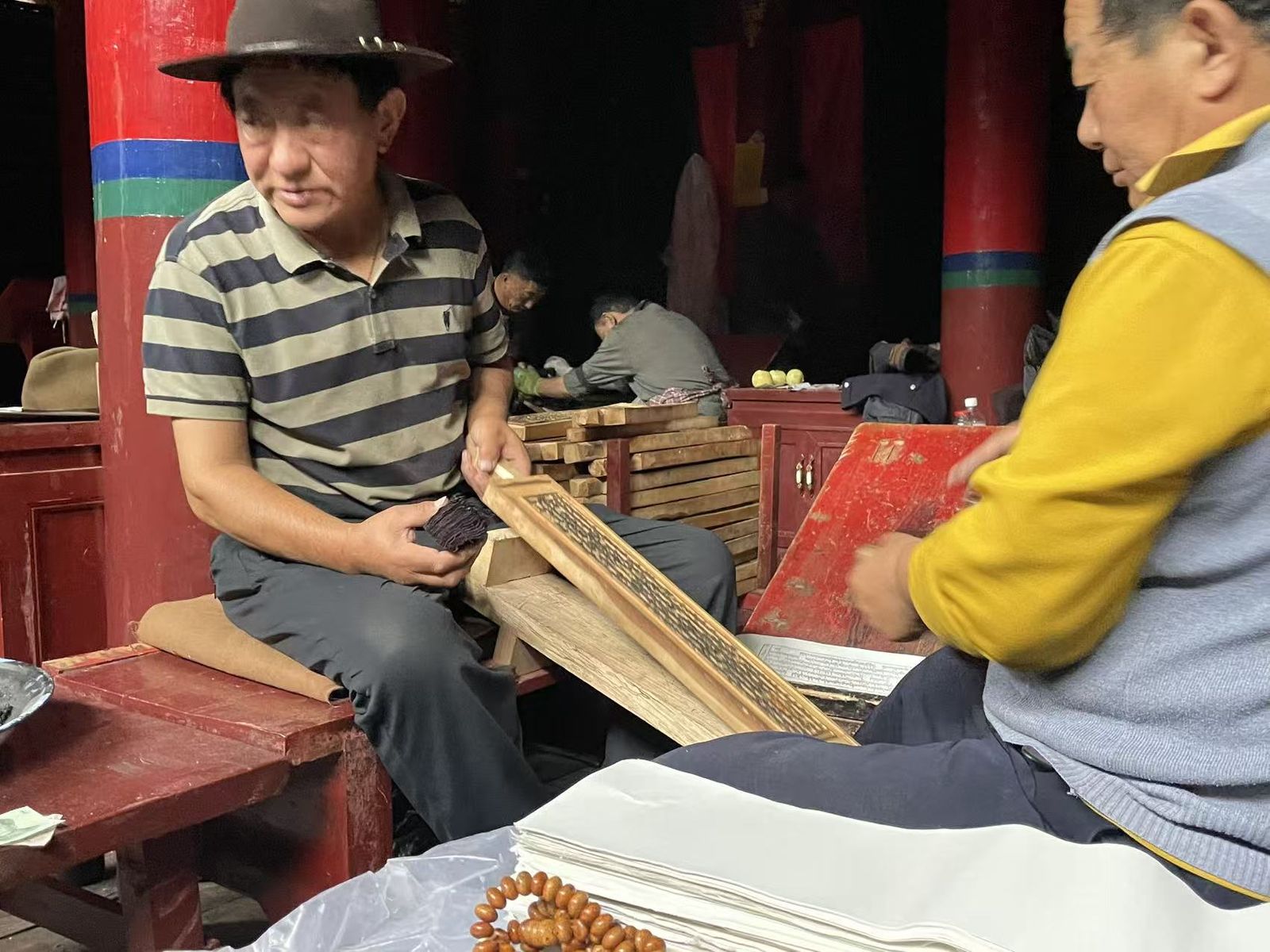
What makes this printing house unlike any other: it keeps the texts of five traditions of Tibetan Buddhism. There are normally four main ones — Nyingma, Kagyu, Sakya and Gelug — and here there is also Bon.
The monks who chant here are good company. I stop and see them every time I come through, and buy them a bubble tea.
Where you sleep: the Derge Business Hotel . The county town is small and cramped and there isn't much choice, so we take clean and tidy over characterful here, and don't pretend otherwise.
Day 9 — Dzogchen, the white stupa, and Sershul
Leave at 9:00 for Dzogchen monastery in Zhuqing town — a monastery under snow peaks where the whole valley is the monastery, and the scale of it takes a moment to read. You register at the gate; there is no ticket. Drive to the lowest car park and start from there, then walk a little way up the hillside if you want to see the retreat caves of the old masters.
On the way you will have passed a very large white stupa. Drive back to it — you can go inside. Then drive up to the main hall square of the monastery itself.
From there, on to tonight's stop: the Sershul monastery guesthouse . As a rule this guesthouse does not take foreign guests, but it can be arranged by contacting them online before you arrive — do it in advance, not at the door. Dinner and breakfast are in Sershul town .
In the morning, get up early and walk one clockwise circuit of Sershul Monastery with the local people — about 30 minutes — to see how the day starts here. It is the closest thing on the route to simply joining in.
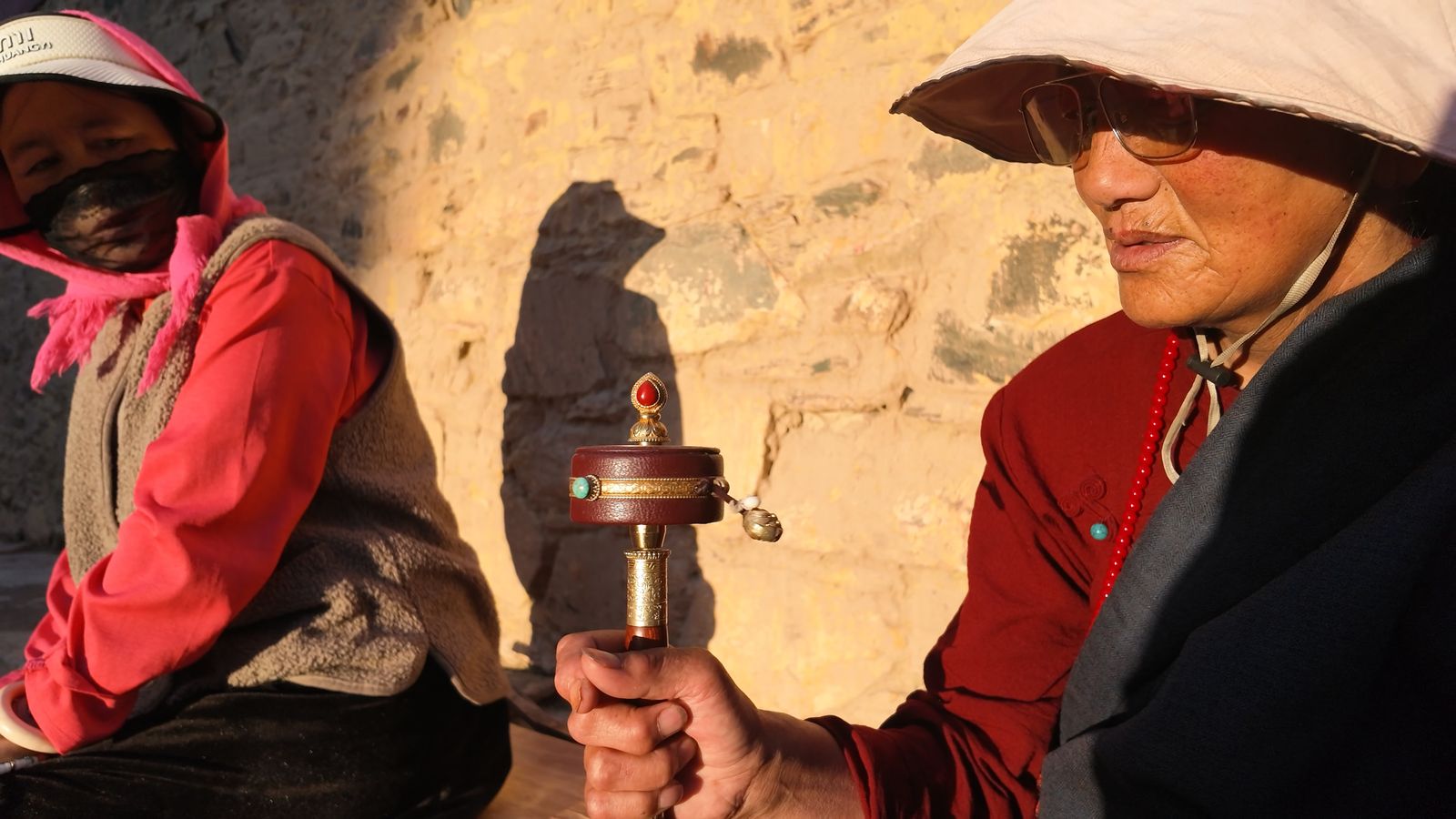
Day 10 — Sershul to Yushu: back in a city
Two hours of driving, and after ten days you are back in a city. Yushu is where the shops, the traffic and the phone signal all come back at once, and after the last week of villages and monasteries that is a slightly disorienting thing.
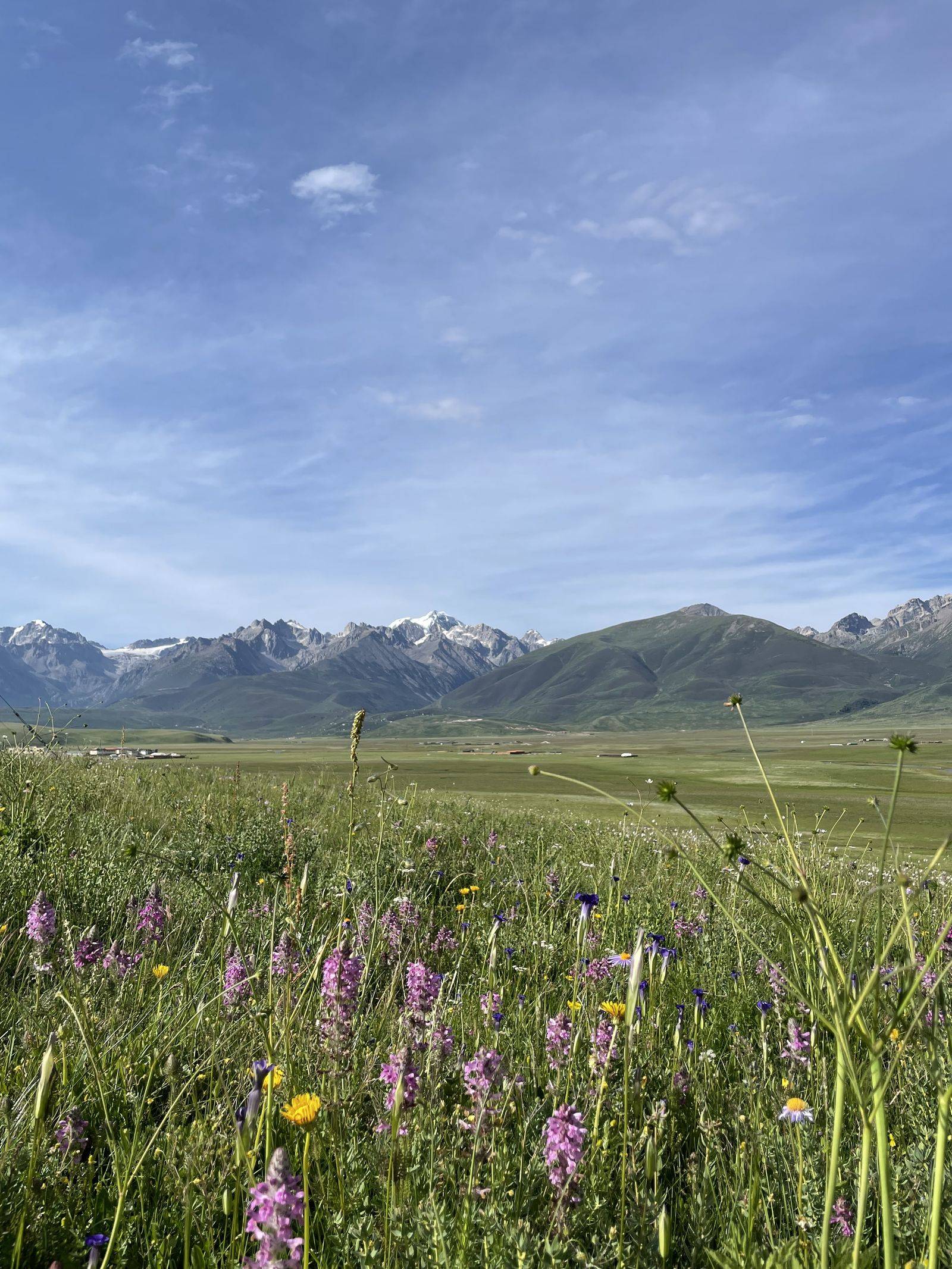
We didn't do much with the afternoon — we rested, which was the right call. Where you sleep: the JI Hotel on Jiegu Avenue — a chain hotel, and that is the point. After a week of guesthouses it is clean, quiet and roomy, it has the same laundry room as Baiyu, and the rooms come with oxygen supply, which at 3,700 m is not a gimmick.
Day 11 — The "Little Switzerland" road out of Yushu
Yushu's best day out is the loop the locals call Qinghai's Little Switzerland. It starts with the Princess Wencheng temple and memorial , runs through cliff carvings cut into the rock all along the way, follows the Tongtian River , and comes back to Gyanak Mani — the largest mani stone pile in the world.
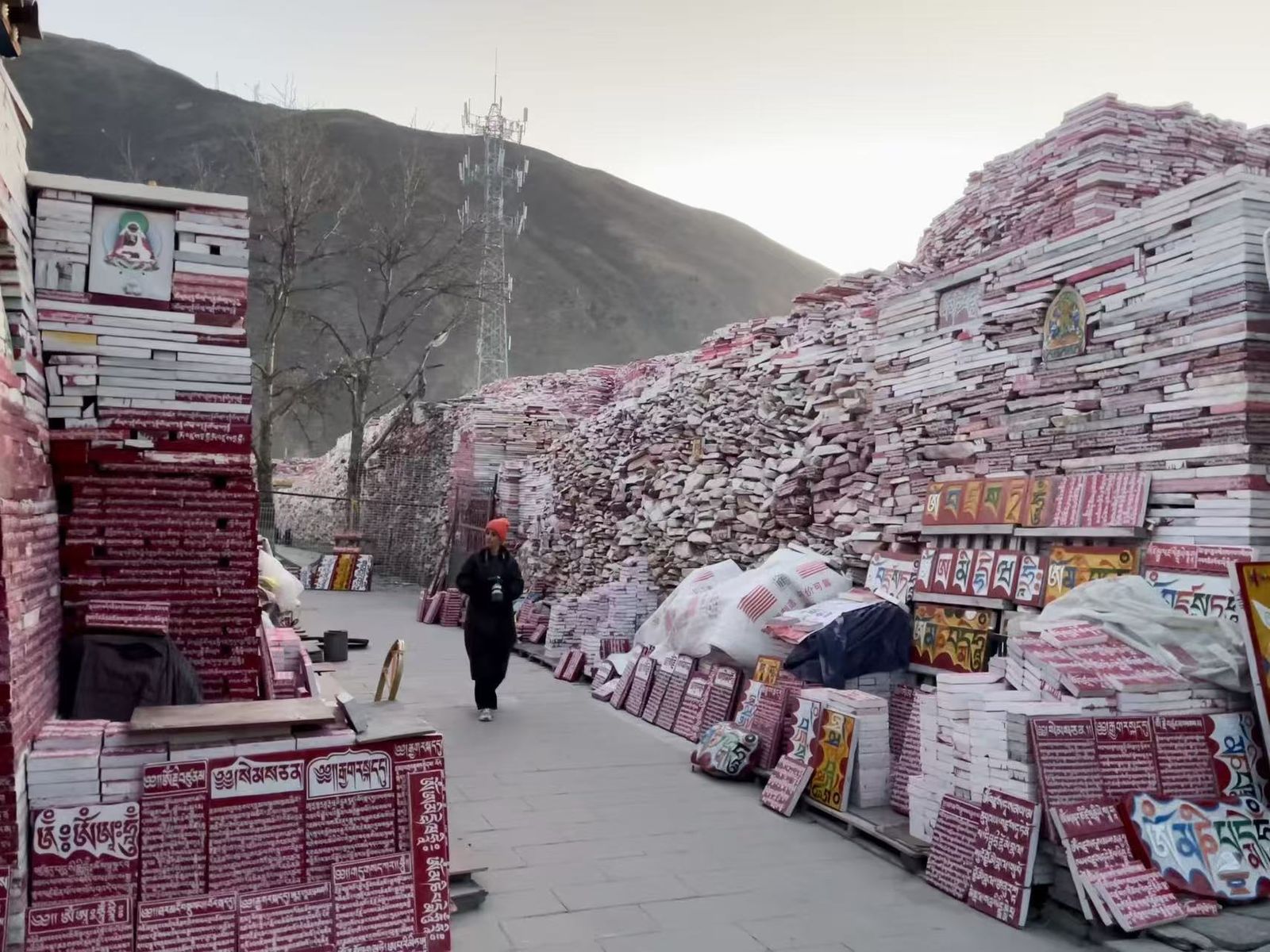
At Gyanak, walk it clockwise with everyone else, and take your time. Around the stones you will very often see people doing full-length prostrations, one after another, for hours. It is a place worth a detour on its own — and it is a good last monastery-side stop before the long run to Xining.
Where you sleep: the JI Hotel again, a second night.
Day 12 — Yushu to Xining: the thirteen-hour day
Thirteen hours of driving. The original plan broke this in three: one night in Maduo , one in Gonghe , and Xining on the third day. We looked at the map, decided there wasn't much between them, and did the whole thing in one push.
The road is an expressway almost the whole way, which is not the same as fast. Long stretches sit on plateau permafrost, and where the ground has settled the surface dips and lifts again — taken at speed, some of those rises will pick you out of your seat. Keep to about 80 km/h, and treat every shaded stretch as ice: the real hazard up here is black ice, and it is there long before the weather looks like winter.
Two things I hadn't expected. We drove this stretch in high summer and still ran into a blizzard up on the mountain — at this altitude the weather does not read the calendar, so keep a warm layer within reach even in July. And coming in towards Xining the road runs past a solar farm so large that it stops reading as engineering and starts reading as landscape: arrays of panels filling the valley floor for kilometres, part of one of the biggest concentrations of solar power anywhere. I did not expect either of those on this road.
Looking back, we were wrong, and at least one of those two nights should have stayed in the plan. What we drove past without stopping: canyons that appear suddenly out of the middle of open grassland, and plateau lakes we could only see in the mirror. The other thing you lose by driving it straight through is the towns themselves — this is where the shape of Qinghai changes, and on the flat ground with the low buildings it starts to look much more like China's north-west than like the plateau behind you.
Where you sleep: Xining.
Day 13 — Xining
The Qinghai Tibetan Culture Museum is the reason to give Xining a full day: 618 metres of painted thangka scroll — the longest in the world, in the Guinness records — plus the performance piece "The Sound of Walking" . Both are worth it, and the scroll is the better part of an afternoon on its own.
In the evening, the Dongguan Great Mosque — and the snack street beside it, which is where you should be eating anyway.
Three places in Xining I'd go back to — two local institutions and one chain I'd defend:
- Ma Yidao barbecue on Xinghai Road — the grill street, and an address for late rather than early. It has been going since 2004, and the barbecue documentary Ren Sheng Yi Chuan made its name beyond Qinghai. Lamb skewers by the handful, lamb ribs, and a house chilli sauce that is the reason people come back. Evenings, and on past midnight.
- Lu Jiyuan Qinghai clay-pot hotpot , 31 Yinma Street — a Qinghai clay-pot hotpot: a charcoal copper pot with pickled cabbage, glass noodles, fried fish, meatballs, cured pork, mushrooms and tofu simmering in lamb broth. Plain room, enormous portions, about ¥77 a head. Order the barley cake alongside it.
- Xigege yak bone broth — yak bones boiled down for hours, with noodles or just the broth, and bread to dip. It is a morning address: opens around 7 am and closes in the early afternoon. Soup and bread come with refills, which in a city this cold is the right policy.
Put together, the three of them cover the whole day: Xigege in the morning, Lu Jiyuan through the afternoon, Ma Yidao after dark.
Day 14 — Xining, one more day
After the rest of the group flew home I stayed on one more day and went to the Qinghai Provincial Museum . Honest comparison: it is the weaker of the two museums. A provincial museum has to explain a whole province, and Qinghai is a very large province, so the exhibition ends up scattered where the Tibetan culture museum is concentrated. If you have one day in Xining, spend it at the first one.
What I'd do differently
Three things, in order of how much they cost us
1. Don't break the journey at Xinlong. This was our biggest error. There is very little in Xinlong — Cuoka Lake is small, charged for, and not special, and the town is an ordinary town. We spent a day there that should have been spent in Maisu. If I were planning it again I'd run it Litang → Batang → Baiyu — south first, then north — and cut Xinlong out altogether.
2. Give Maisu two nights. Twenty-odd craft workshops in one valley, every one of them working, and we gave it one evening. Magda and I both count this as the thing we'd go back for.
3. Keep one of the two stops on the Xining run. Maduo or Gonghe — one of them. Driving the whole 13 hours in a single day means driving past grassland canyons and plateau lakes that were the whole point of that stretch of country.
Things people get wrong here
Six that catch people out
Altitude is spread over the whole two weeks. Tagong is around 3,700 m on night two, Litang is above 4,000 m, and Kathok sits at about 4,800 m. Nothing here is one big jump — but nothing here lets you down either, and there is no low night in the middle to recover in. Drink more water than you think you need, and treat the Kathok day as a high day: don't put anything else in it.
Yarchen Gar is closed. The area is designated a meditation zone and visitors are not admitted; foreign passports are not admitted at all. Plan to see the valley from the road, and expect a checkpoint.
No permit, no Tibet. The Sichuan–Tibet border crossing on the Derge leg is a real border. Photograph the sign, then turn round.
The black tent is not a hotel. There is a stove, a ground floor, a hole outside and no phone signal. Bring a warm layer and a head torch, and leave the suitcase in the car.
The monasteries are working places. Ask before photographing anyone — especially anyone praying or prostrating — and keep cameras off the statues inside the halls. At Baiyu the monks generally don't mind being photographed, but "generally" is not "always", and asking costs nothing.
The Yushu–Xining road is an expressway, but it is not a fast road. Permafrost settlement leaves long stretches of dips and rises, and the high shaded sections carry black ice early and late in the season. 80 km/h is the honest cruising speed — slower than you think through anything in shadow.
How to give the day to the right light
On a route this long the temptation is to treat every day as a sightseeing day. The rule that works is the same as on the loop, only more so: put the things that need shape into the two ends of the day, and drive in the middle of it.
- First light — the kora at Tagong before the family's car comes; the monks at Baiyu Monastery; the circuit at Sershul. Low sun, working monasteries, nobody posing.
- Mid-morning to midday — driving, and the long transfers. This is what the middle of the day is for, and on this route there is a lot of it.
- Afternoon — the printing house at Derge, the old-town lanes at Baiyu, the tent and the workshop courtyards at Maisu. Interiors and flat light.
- Last hour — the grassland at Tagong, the open country south of Yushu, and any of the passes. This is the hour the whole route is built around.
- After dark — the tent fire, and the sky. At these altitudes, step outside before you sleep.
If you're coming to shoot
Bring whatever you normally shoot with. The difference on a route this long isn't the camera, it's the logistics: fourteen days in one car means everything you carry, you carry every day, so travel lighter than you would for the loop.
- Wide for grassland, long for monasteries on hillsides. Kathok and Dzogchen are both built up a slope; the long lens is what makes them read.
- Spare batteries live in an inside pocket. Kathok at 4,800 m will empty them.
- A tripod earns its weight for the tent interior and the pre-dawn kora.
- Ask before photographing people. Every time — in the tent, in the old towns, and outside the monastery halls.
- Inside the halls, no statues. That one isn't negotiable anywhere on this route.
If you only have a week
Seven days gets you the front half: Chengdu, the pandas, Danba, the Tagong grassland and the nomad camp, then back down to Chengdu. That is a good trip and it stands on its own.
Questions I get asked before this trip
How many days does it take?
Fourteen, or thirteen nights. Two of those days are long drives — the first, and the run from Yushu to Xining; every other day is a short hop with a full day's content inside it.
What's the best time of year?
We drove it in late July and early August — the greenest the grassland gets, and the rainy season. The window I'd pick for this route is March to October; the two ends of it are quieter than midsummer.
Can foreigners do this route?
Most of it, yes — we had foreign guests in our group. Two exceptions: Yarchen Gar is closed to visitors, including foreigners, and the Sershul monastery guesthouse normally doesn't take foreign guests, so arrange it online before you arrive. The Derge leg touches the Tibet border; you can't cross it without a permit.
Do I need to book anything in advance?
The Sershul guesthouse, yes. Yarchen Gar is closed, so there is nothing to book. Everything else on this route we turned up to, including the printing house — but on a two-week route in high season I'd rather have the first three nights fixed and the rest loose.
Can I do it without a car?
Not realistically — more so than on the five-day loop. The buses that exist on this side of the plateau are few, slow and often one a day, and several of the places here, Maisu and Dzogchen in particular, are off the bus network entirely. A chartered car for the whole two weeks is the only sane way to do it.
Is the tent stay comfortable?
No, and that's the point. A stove in the middle, the ground underneath, a hole outside, smoke in the air, lights out early. Bring a warm layer even in July and a head torch, and leave the suitcase in the car.
Which is better — this route or the five-day loop?
They're different trips. The loop is five days, it comes back, and it shows you a lot of country with very little effort. This one is two weeks, one-way, and its best days are the ones you can't do in five days: the tent, and the monasteries around Baiyu and Derge. Do the loop first.
Honest notes
Everything in this guide comes from roads I drive myself — not from other people's lists. Conditions change: a monastery closes its gate, a road gets rebuilt, a guesthouse stops taking foreign guests, an entry fee appears. If you get there and something is different, tell me and I'll correct this page.
Where I've named a guesthouse or a restaurant, it's somewhere I stay or eat — not a paid listing and not a ranking. Prices, where I've given them, are the counter prices charged on the day, and they move. The judgement about what to skip — Xinlong, most obviously — is mine, and comes from driving the road once and wishing I'd driven it differently.
We made the trip with Magda from Baba goes China, a travel blog that is featured in the Lonely Planet China 2025 edition. The description of Maisu as a place worth keeping quiet about is theirs, from their own site — I'm quoting it rather than claiming it.
If you're working out how this route would fit your dates, and what the light is doing in the month you're thinking about, that's a question worth asking before you commit — write to me.